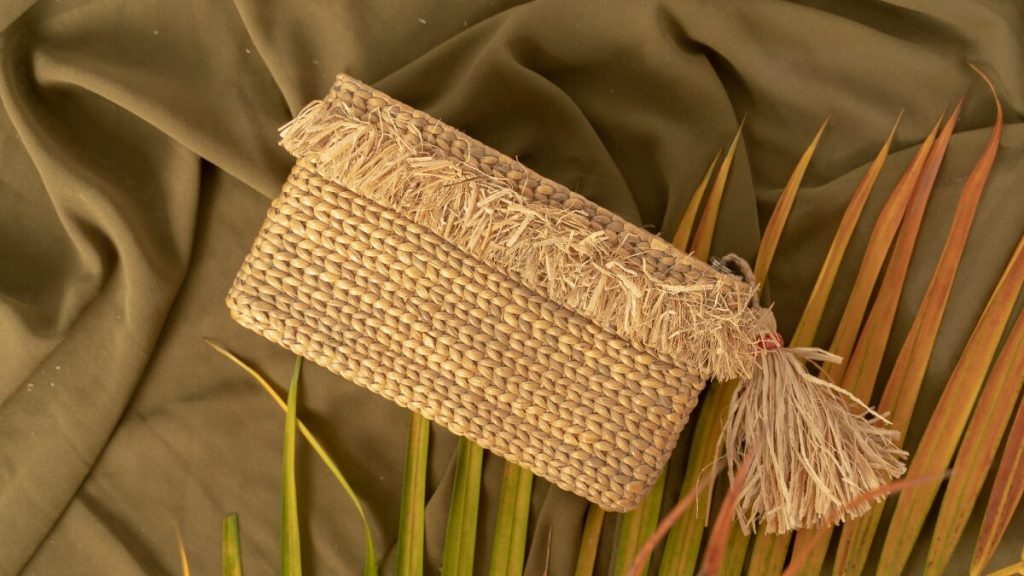
In today’s environment of fast-fashion and mechanical looms that can spit out hundreds of meters of fabric each day, hand-loom weaving provides a refreshing and sustainable contrast. Many people are becoming more conscious of the inhumane labor practices and lack of sustainability in the fast-fashion industry. This has caused some fashion brands to begin searching for alternatives. Traditional indigenous Philippine textiles are gaining popularity across the world because of the striking, colorful designs. This has the added benefit of preserving Filipino heritage and weaving techniques through sustainable fabric production.
Textile design in the Philippines has a rich history rooted in connection with both the spiritual realm and the earthly community. Indigenous tribes in the Philippines each have their own traditional patterns and motifs incorporated into their weaving that have meaning to the communities they were created by. The symbolism in each of these patterns is important to understand before using these traditional fabrics.
This is why we researched a few of those patterns and introduce them below, together with companies who are working to keep the tradition and craft alive. You can do your part by spreading the word and by shopping responsibly.
Binakul is a weaving pattern common to Abra and the Ilocos region in northern Luzon. This pattern is created on a pedal frame loom by interlocking two shades of thread – usually white and a darker color – to create various sizes of rectangles. These rectangles are arranged in a repeating pattern across the fabric so that they create an optical illusion of waves, swirls, or circles.
This pattern is meant to ward off evil spirits by causing them to become dizzy and confused. Binakul was commonly used in blankets to protect people from spirits while sleeping.
Matmata pattern
The matmata pattern consists of diamonds, often with double lines, and is sometimes referred to as “eyes of the ancestors.” This design is common among the Bontoc people in northern Luzon. The matmata is a pattern treated with respect as it is meant to help guide someone who has passed away into the afterlife.
This pattern is most often used in burial blankets and clothing worn by the deceased. It is often combined with other patterns, such as the tiktiko triangle or X-shaped pattern, to convey further meaning. When used together, these two patterns indicate abundance and reverence for the deceased.
Bunga sama pattern
Bunga sama is a complex pattern used by the Yakan tribe in the Sulu Archipelago. The Yakans are known for their intricate, geometric textiles incorporating bright colors. The bunga sama in particular incorporates detailed diamond motifs – which are meant to resemble the skin of a python.
As with many of the colorful designs created by the Yakan, the bunga sama design was most often traditionally made into clothing. However, these days this design is commonly found in accessories and home décor items such as table runners and placemats.
Palipattang pattern
The palipattang pattern is another colorful design from the Yakan tribe. This pattern consists of multicolored stripes, often with intricate, smaller designs woven into the stripes. Palipattang is a thread-based representation of a rainbow.
Traditionally, this pattern was used to make the narrow-fitting trousers worn by the Yakan people. However, as with the bunga sama, it is now often sold in the form of placemats, wall hangings, and table runners.
Binituwon pattern
One of the most recognizable patterns is the binituwon – the star symbol used by the Ifugaos from northern Luzon. Stars are thought to be the children of the sun and moon and are regarded with respect. The binituwon symbolizes fertility and abundance, so in many cases women wear belts incorporating the symbol to help them have a child.
Baniya/Bayawak pattern
Another pattern used in traditional weaving from the Ifugao tribe is the bayawak or baniya. This pattern is a literal representation of a lizard that symbolizes the god who came to earth in the form of a lizard to teach the Ifugaos how to irrigate their crops. It also can represent wealth and prestige and is often worn by those who are regarded as elite within the community.
Tinaggu pattern
The tinaggu pattern is also one that takes the form of a more literal interpretation – it is in the shape of a human figure. When incorporated into textiles, this pattern represents the ancestors of the Ifugaos who have moved into the afterlife and become deities or demigods. Blankets and clothing made with fabric incorporating a tinaggu design element are thought to bring protection from the ancestors.
This small snapshot of traditional Philippine indigenous patterns illustrates the deep meaning and connection these patterns create within the communities they come from. That’s why it’s so important to preserve cultural heritage of weaving and the traditional techniques used to create these textiles. Handwoven fabrics can’t compete with machine-woven fabrics on a scale basis, but they can compete on sustainability, originality, and artistry. Because of the demands of customers, the fashion industry is finally starting to turn towards a more environmentally friendly model that offers fair pay to artisans along every step of the process. This may provide an opportunity for indigenous Filipino weavers to market their work and maintain these traditional techniques and patterns.
Ethically Sourcing Handwoven Philippine Fabrics
Supporting local Filipino artisans helps to keep traditional weaving techniques alive while providing a livelihood for the weavers. However, it is important to make sure that communities producing these textiles are compensated fairly.
ANTHILL
ANTHILL, which is an ethical, sustainability-focused company based in Cebu City, works with weavers across the Philippines to showcase and sell their handwoven fabrics.
Habi Textile Council
Another great place to support local artisans is at the yearly Likhang Habi Market Fair put on by Habi: The Philippine Textile Council, where you can watch lectures and demonstrations on traditional weaving techniques and weavers can sell their textiles. They are a great source for learning about Philippine indigenous textiles and have a lot of great information on their website.
Now that the New Year festivities are over, life goes back to routine for most people. For Cebuanos, though, the turning of a new calendar signals the countdown to the grandest and most popular festival – Sinulog.
The Sinulog Festival is a religious and cultural festival held on the third Sunday of January in Cebu City. Other cities in the country have their own festival in honor of the Santo Niño (Child Jesus), but Cebu’s version is iconic for its vibrant street dance and epic night parties. It’s a major attraction that draws around 1 to 2 million pilgrims and tourists each year.
History of Sinulog
The word “sinulog” describes the prayer-dance that imitates the movement of the water current (sulog).It consists of two steps forward and one step back, danced to the beat of drums. There are two conflicting stories about its origin.
Historians say that the natives of Zebu (now Cebu) have been performing the Sinulog as a ritual before their wooden idols since time immemorial.
Then things took a turn when Portuguese conquistador Ferdinand Magellan came and introduced Christianity in 1521. He presented an image of the Santo Niño as a baptismal gift to Hara Amihan, the queen of then-ruler Rajah Humabon. The newly baptised royalties were later named the first Juana and Carlos. Some 800 natives were also converted to the Roman Catholic faith. Thereafter, Sinulog morphed into a dance which the natives did in reverence to the Santo Niño.
Legend tells a more interesting story though. It is said that Baladhay, the adviser to the Rajah, once lay ill within sight of the Child Jesus. But he was healed and filled with vigor just a few days later, explaining that a small child (pointing to the Santo Niño) had tickled him awake. He said that in his trance, he danced the Sinulog steps (for the first time) to try to scare away the mischievous child. The image was believed to be miraculous and the people (quite literally) followed Baladhay’s steps.
Whether or not it was Baladhay who invented the dance is unclear.
Anyhow, Magellan’s expedition ended shortly when he tried to conquer the neighboring Mactan Island. His reckless quest resulted in his demise in the hands of Rajah Lapu-lapu. Then it took over 40 years for a new group of Spanish explorers to come back and continue the Christianization of the islands.
Miguel Lopez de Legazpi and his ships bombarded the local villages, and in one of the burning huts, one of his soldiers discovered the image of the Santo Niño safely kept in a wooden box. The Augustinian friars who accompanied the expedition built a church on the site where the image was found. The church was named San Agustin Church, now more aptly called the Basilica Minore del Santo Niño.
In essence, Sinulog has become a symbol of the Filipino’s acceptance of Christianity. Candle vendors at the Basilica Minore del Santo Niño would dance the ritual while making offerings to the consecrated image. Small children dressed in moro-moro costumes also dance the Sinulog during the Santo Niño fiesta, which falls on the third Sunday of January.
It was really nothing huge until the year 1980. David Odilao Jr., then Regional Director of the Ministry of Sports and Youth Development (MYSD), organized the first ever Sinulog parade. He invited seven schools and universities to perform a street demonstration depicting the transition from the country’s pagan past to its Catholic present.
The spectacle caught the imagination of Cebuanos. To formalize the event, the city government turned over the Sinulog project to the Cebu City Historical Committee. The Sinulog Organization was born and the start of a new era began.
In the following year, seven floats were created to depict the different periods of Cebu’s Christian history. Sinulog dancers wore costumes reflecting the float they followed. The Festival Queen (the lead dancer) held an image of Santo Niño in her arms while dancing the Sinulog, in imitation of Queen Juana blessing her people.
The committee upgraded the festival each year to invite wider participation from private, commercial and industrial sectors. They would include new features like art exhibits, beauty pageants, singing contests, photo contests, float making contests, fluvial contests, short film festivals, fun runs, and street fairs. Even the Sinulog music evolved from the traditional drum beat to techno funky beat to capture younger participants.
With so many goings-on, Cebu’sSinulog Festival has become a month-long celebration, with the much-anticipated Sinulog Grand Parade held on the day of the feast.
In 2006, the festival was broadcast live on TV and streamed online for all the world to see. And it’s become bigger and better since. It’s given Cebuanos a shared passion, a collective identity, and a culture. In fact, the word Sinulog and its logo are now patented and trademarked – the very first granted to a festival
Sinulog Activities
Sinulog properly kicks off more than a week before the third Sunday of January. The devotees first do a penitential walk to the Basilica, and thereafter hold novena masses in Cebu’s churches for nine consecutive days. A sprinkling of activities happens alongside these masses – all sorts of contests, pageants and mall events.
Then the following activities take place in quick succession prior to the grand festival:
Thursday: Traslacion – The Santo Niño and an image of Our Lady of Guadalupe make their way from the Basilica to the Shrine of Saint Joseph in Mandaue City.
Friday: Fluvial parade – The fluvial procession which bears the Santo Niño starts from Ouano Wharf going to Lapu-lapu island, then back to Cebu and the Basilica.
Saturday: Solemn procession – The procession circles Cebu’s main thoroughfares, starting and ending at the Basilica. Devotees light candles and carry their own image of the Santo Niño while dancing the Sinulog – some join to seek favour for wishes while others do so in gratitude for answered prayers.
On Sunday, the Grand Parade starts early and inches its way down a 4-mile stretch. The Mardi Gras-like spectacle culminates in a grand event at the Cebu City Sports Complex, where the street dance troupes compete for over a million pesos in prizes. Mind you, these dance troupes are the cream of the crop – they come from all over the Philippines dressed in their most intricately designed costumes.
During the parade, the dancers sway to the Sinulog theme song on repeat while shouting “Pit Senyor!”
While some people march along with the parade, many would set up tables by the street sides to hang out and drink.
When night falls, the city comes alive with club parties and shindigs at different locations. The most notable are Sinulog Invasion and LifeDance Cebu, an EDM dance party very much like Coachella. Non-party goers walk their way to malls and plazas for some tasty grubs at food stalls while waiting for the grand fireworks display at midnight.
The Sinulog Festival officially ends a few days after the Grand Parade with a mass called the “Hubo,” the Visayan term for undressing. During the mass, the Santo Niño is ritually undressed, bathed in perfumed water, dressed and put back into its niche.
Sinulog can be overwhelming for first-timers, so you need a few survival tips for the best and safest experience.
Sinulog 2020: “Señor Santo Niño – Cause of our Unity and Charity”
Sinulog is just around the corner. On January 19th, Metro Cebu will once again host the breathtaking and kaleidoscopic religious/cultural display billed as the most captivating festival of the Philippines.
With pulsating tribal beats, out-of-this-world garbs, entrancing chants and fever-pitch energy, you’re in for a sensory overload.
The city is already buzzing with anticipation for the Sinulog activities. There are nightly activities at Plaza Independencia and Fuente Circle, and trade fairs at Osmeña Blvd where you can buy your Sinulog merchandise.
It’s customary for tourists and locals to wear Sinulog shirts – you can have it cut and braided at the sleeves and seams for a more festive look. Face painting, henna tattoos, and other festival accessories are available on site during the grand parade.
Here are some of the highlight events you might want to catch:
January 17: Search for Sinulog Festival Queen.
January 18: Fluvial parade. At dawn, more or less a hundred boats bedecked with red and yellow flowers sail alongside the Spanish galleon-like watercraft carrying the Child Christ. It is a tradition kept alive by faithful attendees. Devotees cheer whenever their boat gets near the float of Santo Niño as it’s considered a blessing. Spectators waiting at the bridge shower the boats with flower petals when they pass. It’s quite a feast to the eyes.
At 7:00 p.m., the Battle of the Best Pyro Competition (Fireworks Display) happens at SM City Cebu.
At 8:30 p.m., you can catch the Sugbuanong Musika Grand Finals at Fuente Osmeña Circle or the IPI Night at Plaza Independencia.
January 19: Sinulog Mardi Gras and Grandstand Competition
January 13-19: Fiesta at the Park 2020 (Cebu Business Park)
January 17-19: Cebu Puso, One Globe Sinulog Fair
Most tourists are expected to pour in a day or two before the main celebration. The city will be in a frenzy on the Sinulog weekend, so visitors are advised to book their flights ahead of time.
Here’s how the day of the feast will go:
4:00 a.m. – Mañanita Mass at the Basilica
6:00 a.m. – Pontifical Mass at the Basilica
6:30 a.m. – Holy Mass at Cebu City Sports Center
9:00 a.m. – Sinulog 2020 Grand Parade Kick Off at Cebu City Sports Center
5:00 p.m. – Sinulog 2020 Grand Finale at Cebu City Sports Center
7:00 p.m. – Wonju Dynamic Dancing Carnival (Korean Cultural Dance) at Plaza Independencia
7:00 p.m. – Pyro Musical Show at SM City Cebu
8:00 p.m – Extraordinary Pyro Magic in the Sky at SM Seaside City Cebu
9:00 p.m. – Festival of Lights – Grand Fireworks Display at Cebu Business Park
Important tip: Stay at a hotel near the procession route. Accommodation around Fuente Circle, Ayala, SM, Lahug sell out fast because they offer the easiest access to the main celebration. These areas also serve as venues for other pre-Sinulog activities. Since the roads around the procession route will be blocked for the solemn procession and the parade, it’s impossible to get a taxi to drop you off where the action is.
If you’re planning to see the grandstand competition among the 26 Sinulog dance troupes, you’ll need to buy a ticket from the Sinulog Foundation Inc. office at the Cebu City Sports Complex (CCSC). This year, they’ll be using wristband tickets with QR codes to counter the selling of forged tickets by unauthorised persons and for security reasons as well.
There’s no info yet as to the prices, but the tickets usually cost from Php 1,000 to Php 3,000.
Sinulog 2020 survival tips
It takes more than enthusiasm to survive the grandest revelry that’s about to unfold. Here are some mental and physical preparations for a fun and safe Sinulog Mardi Gras experience:
Wear breezy clothing… but not too skimpy so you don’t get sunburn and indecent stares. You’ll be in a huge crowd under the scorching sun – for hours! Wear a pair of trusty shoes because there’ll be endless walking. And, of course, don’t forget your sunscreen!
Bring a portable fan or a hat – They’re a lifesaver! The weather can be unpredictable – a raincoat or umbrella may come in handy.
Stay hydrated – Best to bring your own bottle of water. There will be lots of vendors selling drinks and snacks, but the prices are often jacked up.
Follow the crowd… if you don’t know where you’re going. Walk alongside groups so you don’t invite unwanted company.
Keep calm and cool. Expect long lines, constant pushing, rowdy crowds, and paint/beer showers – it’s all part of the game. Just enjoy and keep the festive spirit.
Mind your pocket – Pickpockets and bad elements are rampant during this opportune time, so don’t let your guard down. Better to bring a small amount of cash and your camera/phone, and leave other valuables at the hotel.
No backpacks allowed. Those who wish to go inside the Basilica Minore del Santo Niño Church must observe the Clear Bag Policy. While it may be inconvenient, the policy is meant to pre-empt any bombing or terrorism threats. The general public is advised not to carry prohibited bags to prevent delays caused by having people go through security checks.
Have a backup communication plan. Unlike in previous years, there will be NO SIGNAL SHUTDOWN during Sinulog 2020. The city will be deploying 1,600 police personnel all over Cebu for tighter security. However, they will prompt a signal jam should they encounter any suspicious persons or items.
That means your phone might still lose network signal any time. If you’re meeting with friends on the day of the parade, agree on a meeting place and stick to it. Take screenshots of maps and landmarks on your phone as well. Or, get together the night before so you won’t lose your way finding one another in the crowd.
Last year, the FireChat app was a hit because it allowed users to bypass the signal jam. Have you and your friends download it so you can keep your communication lines open.
Drink moderately – It’s easy to get carried away by the frenetic mood, but it’s best to drink within your limit. Also, keep in mind that there’s a liquor ban within the 300-meter radius from the Sinulog area.
Make friends – Sinulog is best enjoyed in the company of friends – both old and new. People are in their best mood and are much more open to partying with strangers during the event. Going with a group not only means twice the fun but also having someone who will watch your back.
Hey, it’s Chenzi! A writer made in Cebu. Stringing words is my bread and butter, but baking and mothering my 3-year-old are what feed my soul. I have an insatiable thirst for learning.
Upgrading my travel wardrobe with Philippine textiles and fabrics. Because mindful living > mindless shopping. Get inspired.
I’m no Carrie Bradshaw. My idea of a fashion emergency is realizing all my socks have holes. But after a few years tucked away in my Cebu apartment, surrounded by unread books and half-finished Netflix series, I’ve had an epiphany. It wasn’t some spiritual awakening amidst the banana trees; it was a deep dive into the dark side of my closet – that black hole of fast fashion where forgotten t-shirts and impulse-buy dresses go to die.
Turns out, my wardrobe is a crime scene. Cheap fabrics, unethical production, a devastating environmental impact… Suddenly, my cozy introverted existence felt a whole lot less comfortable. You might think, as a digital nomad in the Philippines, I’m worlds away from the sweatshops and polluted rivers that fuel the fashion industry, right? Wrong.
The truth is, what we wear matters. Our choices ripple outwards, impacting communities here in the Philippines and the health of the planet. And that’s where Philippine textiles and fabrics come in. They’re not just beautiful – they’re a lifeline to a different way of making and consuming clothing. Think intricate weaves, natural fibers, and a history that makes those $5 tees look painfully shallow. This isn’t just about ditching cotton (although we’ll get to why that’s a good idea too). It’s about discovering fabrics with stories as rich as your morning coffee, and a style that’s as mindful as your travel itinerary.
So, if you’re ready to trade your worn-out leggings for something more meaningful, to travel with a lighter footprint, and maybe even feel a little more fabulous in the process, stick around. As someone who seriously considered wearing the same muumuu for a week straight, I’m here to tell you that sustainable style is possible.
The Problem with Cotton
Despite my love affair with linen and Philippine textiles, I haven’t fully banished cotton from my life. My closet still harbors a few relics from my H&M-loving days. See, even the most mindful digital nomad can stumble. But before you judge, let’s unpack the whole tangled mess that is cotton. It’s not just about trendy tote bags; there’s a dark underbelly to that soft white boll.
What’s the Environmental Cost of Cotton?
Turns out, my comfy t-shirt is a thirsty, thirsty beast. Growing conventional cotton is like throwing a water-guzzling party for your clothes. Did you know something like 2,700 liters of water go into producing a single t-shirt? That’s enough to keep a person hydrated for two and a half years. Kinda puts your morning coffee habit in perspective, huh? Cotton fields are also notorious pesticide guzzlers. It’s a vicious cycle – the more pesticides you use, the more you damage the soil, the more water you need.
Why Cotton Production is a Major Water Polluter
Remember that time an entire sea dried up? Yep, I’m talking about the Aral Sea disaster – largely blamed on water diversion for cotton irrigation. Ecosystems have been devastated, all in the name of cheap denim.
Then there’s the pesticide problem. Remember Rachel Carson’s “Silent Spring”? The gist is: chemicals bad. Cotton fields get doused in ’em. Those toxins seep into the soil, the waterways, and eventually, into the whole darn ecosystem. Reminds me of that scene in The Matrix when Agent Smith talks about humans being a virus… not wrong when it comes to our impact on the planet.
What’s more? Sometimes farmers would pull out cotton plants to get rid of any eggs or spores from the field. When soil is exposed to the air, it loses nutrients. So fertilizers are added to the soil. Nitrogen is the most common ingredient in synthetic fertilizer. The problem is that nitrogen fertilizers are a major contributor to greenhouse gas emissions.
How Ethical is Your Cotton T-Shirt? Labor Practices in the Cotton Industry
Shopping sustainably is a head-scratcher sometimes. You find a “Made in Bangladesh” tag and your conscience starts whispering about forced labor, poverty wages, and sweatshop conditions. It’s the fashion world’s dirty little secret. And guess who’s paying the ultimate price? Workers trapped in a system designed to keep those t-shirts dirt cheap.
Remember when everyone got up in arms about sweatshops? Turns out, the cotton industry in Southeast Asia has its share of shady labor practices. We’re talking long hours, low wages, and maybe even child labor in some places. Suddenly, that five-dollar tee seems less of a bargain and more like a complicity badge. Yikes.
Philippine Textile Traditions: A Sustainable Legacy
When I first arrived in Cebu, my idea of “local textiles” meant brightly-colored souvenir tees and cheap sarongs from beachside stalls. I was all about that easy, breezy, digital nomad uniform. But then, like any good introvert forced to leave her apartment, I stumbled into a rabbit hole – a world of fabrics, colors, and stories I never knew existed.
Who are the Indigenous Weavers of the Philippines?
Forget what you think you know about weavers as little old ladies hunched over looms. The textile traditions here are passed down through vibrant communities across the islands. We’re talking the T’Boli women of Lake Sebu, the Mangyans of Mindoro, the skilled artisans of Ilocos… these are cultures where weaving isn’t a hobby, it’s an integral part of their identity and their connection to the land.
What are the Unique Qualities of Traditional Filipino Fabrics?
Okay, here’s where the geek in me gets excited. Piña fiber, scraped from pineapple leaves? Abaca, strong enough for ships’ ropes but also woven into delicate fabrics? It’s the science of taking what nature provides and transforming it through sheer skill.
The colors are often from natural dyes, with rich browns, deep blues, and vibrant reds that speak of earth and sky. Forget the idea of pristine perfection. Traditional textiles often have minor irregularities that betray the human hand, the slight slubs and variations that make mass-produced fabrics look soulless in comparison.
In a world drowning in fast fashion waste, these weavers are the antithesis. They work with natural fibers, often locally sourced. Their dyes come from plants and minerals. The process might be slow, but it’s incredibly low-impact. Plus, buying traditional textiles supports whole communities, not faceless corporations.
My journey into the world of Philippine textiles is just beginning. But like Jane Goodall discovering gorillas, or maybe more like Carrie Bradshaw stumbling into a Manolo Blahnik sale, I’m hooked. It’s not just about the fabric; it’s about the connection, the history, the guilt-free satisfaction of knowing my wardrobe choices matter…even for an anti-fashionista like me.
Where to Buy Sustainable Philippine Textiles and Fabrics
Finding clothes that fit both my values and my suitcase is harder than getting a decent WiFi signal in some of these tropical hideaways. I’m not about to turn into a hemp-wearing, patchouli-soaked cliche, but neither can I live with the guilt of fueling the fashion industry’s eco-sins. So, my fellow nomads, let’s get real about how to hunt for sustainable style in the Philippines – and pull it off without looking like an off-duty archaeologist.
What to Look For: Labels Aren’t Perfect, But Here’s How to Spot Real vs. Greenwashing
It’s a jungle out there, sisters. Not every “eco-friendly” label is legit. Like a bad date, some are just greenwashing to get your attention. First, ditch the idea of perfect. Aim for better, not flawless. Look for natural fibers like piña or abaca – bonus points if they’re handwoven and naturally dyed. Check for transparency – does the brand share where their fabrics come from? How about the makers’ stories? If they’re vague, that’s a red flag.
Where to Find the Good Stuff: Markets, Boutiques, and Online Shops with a Conscience
Forget the generic mall chains; we’re talking about concept stores. Think of those teeming with color, not tourists.
Top of my list is ANTHILL Fabric Gallery, established way back in 2010 (which makes me feel old, but that’s a separate issue). They get bonus points for their name: Alternative Nest and Trading/Training Hub for Indigenous/Ingenious Little Livelihood seekers. It’s got a clunky charm that appeals to my word-nerd side. Expect loads of handwoven, hand-loomed fabrics that give your closet some serious soul. And yes, they have printed fabrics too, if you crave a dash of pattern.
Beyond that, Cebu’s got these cottage industries in places like Argao. They churn out gems like kinarnero (a wool-like fabric that sounds way cooler than it probably looks on me). Catch their wares at events like Gabii sa Kabilin or old-school heritage places like Casa Gorordo Museum – perfect for channeling that faded colonial elegance.
Outside Cebu, local textiles and fabrics can be sourced from the following manufacturers and brands:
La Hermina Piña Weaving Industry
Reycon’s Piña Cloth and Industry
Malabon Piña Producers and Weavers Association
Rurungan sa Tubod Foundation
Creative Definitions
Filip+Inna
Casa Mercedes
Manila Collectible
Gifts & Graces Foundation
Yakang Yaka
Interweave
Good Luck
Humans
There isn’t one single fabric that can sustainably meet the needs of over 7 billion people. But we can change our consumer habits to help the environment.
FAQs
Isn’t slow fashion just a trend?
Maybe. But trends I can get behind don’t end up in landfills, unlike my 2005 skinny jeans.
Can I really make a difference?
One less t-shirt won’t save the planet. But small choices add up, and feeling good about those matters.
Will locals think I’m appropriating?
Wear with respect, not like a costume. Appreciation beats imitation, especially for textiles with meaning.
Are they expensive?
More than fast fashion, less than designer duds. Think: investment in quality, not a Zara impulse buy.
Can I wash them in my Airbnb’s sink?
Depends. Piña is delicate. Abaca can handle adventure. Read the tags like I should with skincare labels.
Parting Thoughts
I’m not going to trade my comfy leggings and ironic Star Wars t-shirts for a wardrobe full of handwoven wonders. A girl’s gotta maintain a baseline level of geek chic, after all. But even a reluctant fashionista like me can see the appeal of Philippine textiles and fabrics. They’re beautiful, and unique, and carry stories far more interesting than whatever I last binged on Netflix.
You don’t have to overhaul your entire wardrobe like I did during that minimalist phase inspired by Marie Kondo (which, let’s be real, sparked zero joy). A statement scarf, an abaca bag – even small shifts support Filipino weavers and reduce your impact. Plus, imagine sipping your third flat white of the day, knowing you look stylish and made a conscious choice.
This holiday serves to remind us that the freedom we enjoy now as a nation was fought with the blood, sweat and tears of our valiant Filipino heroes.
Every last Monday of August is dedicated to honouring and remembering not just the prominent figures that fought for Philippine independence but also the unsung heroes, past and present, who have contributed much to the cause of justice, freedom and nationhood.
Holiday Facts
The holiday was established in 1931
The first celebration of National Heroes Day was during the American colonial period
That’s right, the Philippines was still an unincorporated American territory when the holiday was first observed.
The Philippine legislature at the time enacted Legislature Act 3827 declaring the last Sunday of August an official national holiday for that purpose.
‘Holiday economics’ moved the holiday from Sunday to Monday
In 2007, former president Gloria Macapagal Arroyo issued Republic Act 9492, which moved regular or nationwide special holidays to the nearest Monday or Friday of the week. For example, holidays that fall on a Wednesday may be moved to the Monday of that week, and holidays that fall on a Sunday are moved to the Monday of the following week.
With the so-called ‘Holiday Economics’ as rationale for the Act, the administration believed that extending the weekends will boost the economy by reducing mid-week work disruptions and promoting domestic leisure and tourism.
August is the month of the historic ‘Cry’
The “Cry of Pugad Lawin” or “Cry of Balintawak” signalled the formal start of the Philippine Revolution against Spanish rulers. This was initiated by the hitherto secret revolutionary movement called Katipunan.
In an act of defiance, members of the Katipunan tore up their cedulas (tax certificates) at Pugad Lawin/Balintawak (the exact location is still being disputed), sometime in August. Although nobody can tell exactly when the Cry happened, the general consensus is that it took place in the last week of the month, hence we celebrate National Heroes Day around this time.
Only two national heroes have their own assigned holiday
These are Jose Rizal (Dec.30) and Andres Bonifacio (Nov.30), the former being the Philippine National Hero and the latter being the head of the Katipunan. National Heroes Day specifies not a single hero, which includes even those who didn’t manage to get their names written in our history books.
How do Cebuanos celebrate National Heroes Day?
The local government normally holds a formal ceremony to pay homage to our brave heroes and, at the same time, recognize modern-day heroes who bring pride and honor to the country. Last year, the recognition went to the country’s fastest speedcuber, Leo Borromeo, and the Philippine Accessible Disability Services Adaptability Dragonboat Racing Team who won back-to-back titles in the International Paradragon Boat Championship.
But like any other holiday, we take National Heroes Day as an opportunity to take on leisure and recreational pursuits. Many would flock to nearby islands and beaches, while others trek the mountains or take to the roads.
The island of Cebu is rife with beautiful beaches and natural attractions, a long weekend wouldn’t even suffice. Still, any holiday is an excuse to go out and about.
Check the coworking spaces schedule on National Heroes Day.
About the author
Hey, it’s Chenzi! A writer made in Cebu. Stringing words is my bread and butter, but baking and mothering my 3-year-old are what feed my soul. I have an insatiable thirst for learning.